Category: Uncategorized
-
Toxic chemicals are building up in people!
Foods we need to stay healthy—like mother’s breast milk, fish, and vegetables—are contaminated by dangerous chemicals because of the way they are grown and processed and from industrial pollution. Don’t wait for the EPA to figure out how much is safe enough. Reverse Osmosis Removes Forever Chemicals click for the systems I have in my…
-
Is tap water safe to drink? Here’s what you really need to know.
Experts weigh in on the chemicals that can be found in drinking water, how it’s regulated, and what you can do if you’re worried about your water. Solution? Filter water at point of use! Filter your drinking water What are PFAS, the latest chemicals to get EPA attention? Type “drinking water” into your search bar,…
-
Child growth and development hampered by PFAS in their blood
See full story below Filter your drinking water CNN Reports Potentially toxic chemicals found in everyday products, including fast-food wrappers, makeup and carpeting, are altering hormonal and metabolic pathways needed for human growth and development, according to a new study. EPA proposes first standards to make drinking water safer from ‘forever chemicals’ Researchers analyzed study…
-
EPA proposes “safe PFAS limits” in drinking water!!
There is no safe limit. They are linked to cancer and developmental issues. They accumulate in your children’s body over their lifetime. They should all be filtered out!! Reverse Osmosis removes them before you drink the water. Click here for systems The United States Environmental Protection Agency (EPA) announced a proposed national standard for PFAS in…
-
Are we consuming Microplastics
Filter your drinking water Are we consuming microplastics? Reverse Osmosis removes Microplastics and Forever Chemicals Yes. Microplastics are present in both tap water and bottled water. A study showed that an average of 325 plastic particles were found in a liter of bottled water as compared to 5.5 plastic particles per liter of tap water,…
-
PFAS levels in blood of pregnant women
Filter your drinking water Per- and polyfluoroalkyl substances (PFAS) are a class of synthetic chemicals that have been widely used in manufacturing since the 1940s due to their water-resistant, stain-resistant, fire-resistant, and anti-stick properties [1]. Due to their extensive use and their propensity to bioaccumulate, they are ubiquitous in the environment and present a risk…
-
PFAS – Unsafe at any detectable levels.
Filter your drinking water August 2022 – WASHINGTON, DC — The U.S. Environmental Protection Agency (EPA) took a big step toward expanding toxic ‘forever chemical’ cleanups by proposing to list the two most well-studied versions of PFAS chemistry as official “hazardous substances” under federal law. In the announcement, the EPA said the proposed hazardous listing is based on…
-
Mapping the PFAS contamination crisis
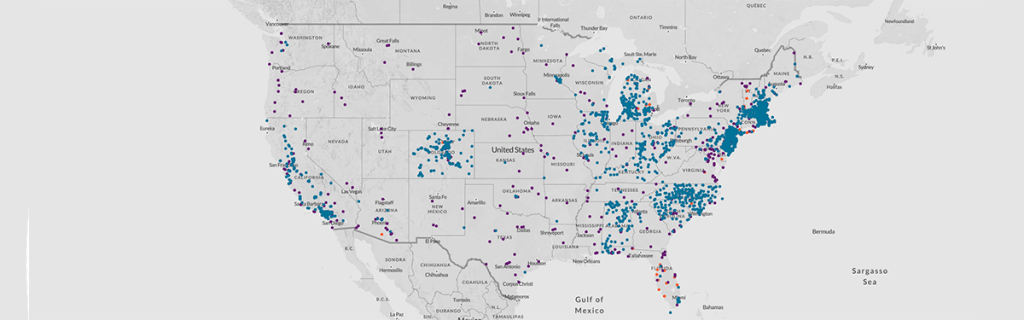
New data show 2,858 sites in 50 states and two territories Filter your drinking water WHY IS THIS MAP IMPORTANT? The number of U.S. communities confirmed to be contaminated with the highly toxic fluorinated compounds known as PFAS continues to grow at an alarming rate. As of June 2022, 2,858 locations in 50 states and…
-
Why are PFAS a problem?
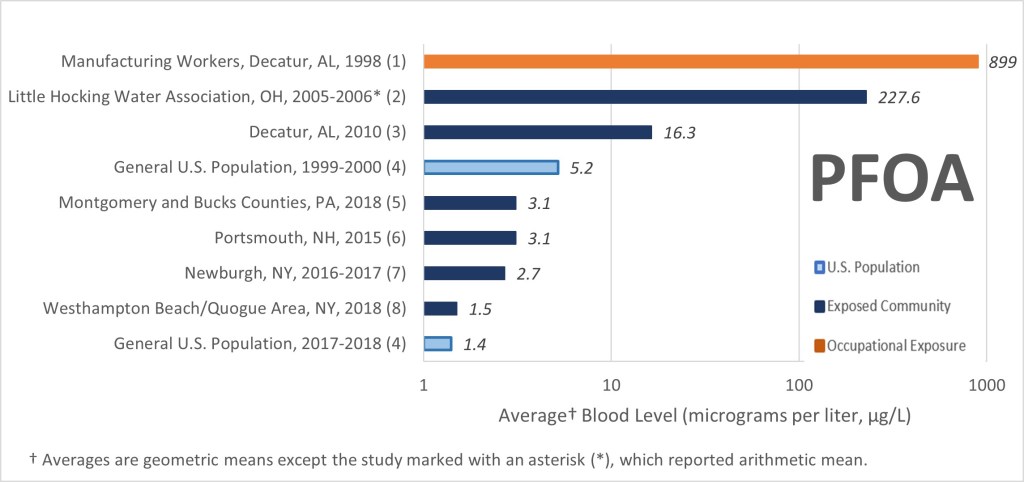
Safer Drinking Water The worldwide use of PFAS has resulted in public and regulatory concerns due to the release of these persistent chemicals into the environment. The very characteristics that made PFAS attractive in industrial applications—stability and resistance to chemical, thermal, or biological degradation—have made them problematic. PFAS bioaccumulate is believed to create human health…
-
What are PFAS?
Safer Drinking Water Per- and Polyfluoroalkyl Substances (PFAS) are a diverse group of synthetic chemicals used for over 50 years in industrial applications; including many consumer products for stain resistance, non-stick materials and waterproofing. Beginning in the 1960s, PFAS became key components of foams used for Class B firefighting. They don’t easily break down in…
 Safer Drinking Water